In the world of digital growth, finding a “free” keyword research tooloften feels like a bait-and-switch. You discover a promising platform, only to be met with hidden paywalls, strict daily usage limits, or data that feels more like a finger in the wind than a solid technical metric, the kind of metric a comprehensive website audit servicewould uncover. Yet, keyword researchremains the “North Star” of search engine optimization—the strategic blueprint that dictates every dollar spent on content and separates high-traffic winners from sites that languish on page two.
As a Senior SEO Strategist offering direct SEO consultations, I’ve seen countless creators fall into the trap of trusting inaccurate, surface-level data. To help you navigate this landscape, we have analyzed the industry’s top free resources against actual Google Search Console data. What we found is that you don’t need a $100/month subscription to find “blue ocean” opportunities; you just need to know how to use the free keyword research toolslike a pro.
The Accuracy Gap: Why “Free” Data Often Lies
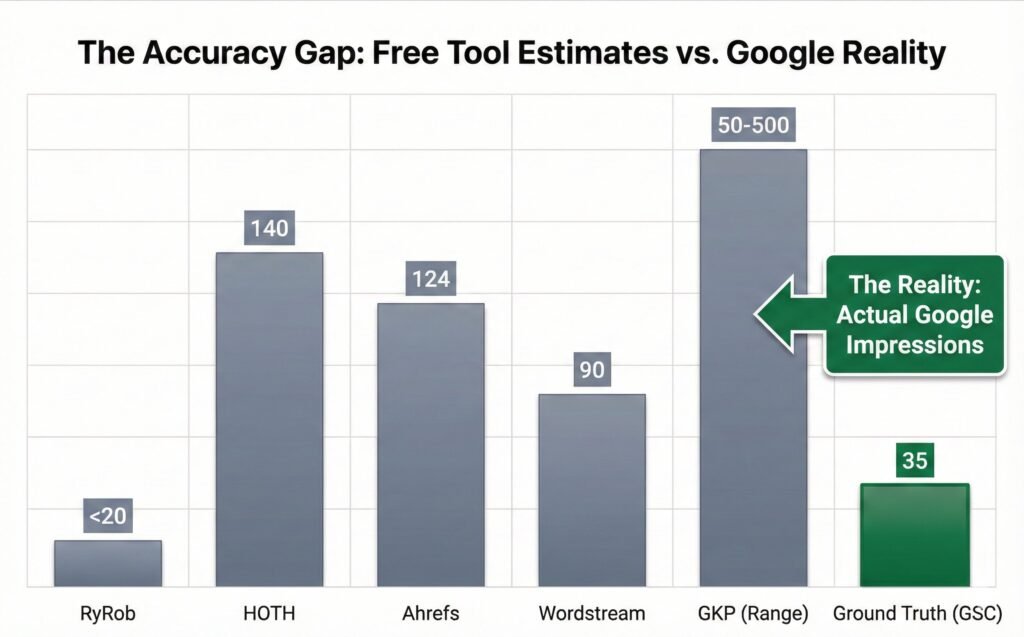
Many free keyword research toolsprovide search volume data that varies wildly, leading to a massive “Accuracy Gap.” To prove this, let’s look at a case study for the keyword “Rank Math Tutorial.” Here is how the free platforms stacked up against the “ground truth” of Google Search Console (GSC):
- RyRob: < 20 monthly searches
- The HOTH: 30 monthly searches
- Ahrefs Keyword Generator: 30 monthly searches
- Wordstream: 140 monthly searches
- Google Keyword Planner (GKP): 100–1,000 (range)
- The Ground Truth (GSC): 124 monthly searches
Wordstream and Google Keyword Planner emerged as the most accurate because they sit closest to the source. Most third-party keyword research toolspull their metrics via Google’s API, but they often struggle to interpret the nuances of specific niches.
“Google Keyword Planner is my go-to source because, number one, they are the source. Most keyword research toolsout there use Google’s API to get the data.”
The Competitor Backdoor: Reverse-Engineering Success
Most users start their keyword researchby entering a “seed” term like “real estate tips.” A professional strategist, however, uses the “Backdoor” method. Tools like Google Keyword Planner (GKP) and Wordstream allow you to select a “Start with a Website” option.
By pasting a competitor’s URL into GKP, you can see every keyword that specific page is ranking for. But here is the “pro” nuance: GKP is the superior keyword research toolfor this because of its “Refine Keywords”feature. This allows you to filter out competitor brand names (e.g., “Elementor” or “Amazon”) that a new site cannot rank for, leaving you with purely organic, long-tail opportunities that you can target with high-quality content.
The “Blue Ocean” Hack: Hidden Data in Scholarly Journals
While your competitors are fighting over the same metrics in standard keyword research tools, there is a massive competitive advantage hiding in “stuck” data—specifically in books and scholarly journals.
Professional SEOs use AI tools like Claude or ChatGPT to extract sophisticated themes from academic sources to fuel their keyword research:
- The PDF Tactic: Download a scholarly journal as a PDF and upload it to an AI. Ask the AI to extract specific pain points, industry terminology, and questions addressed in the text.
- The Amazon/Google Books Table of Contents: Use a scrolling capture of an authoritative book’s table of contents. AI can then translate these “offline” topics into digital search terms.
- The Strategic Advantage: Information in academic journals is often not yet indexed or targeted by commercial SEOs. This creates a “blue ocean” of keywords that high-authority sites haven’t optimized for yet.
The “Alphabet Soup” Method and Answer Socrates
Manual “Alphabet Soup” typing a term into Google and cycling through letters (e.g., “SEO tips a…”, “SEO tips b…”) is the gold standard for finding real-time user intent during keyword research. However, it’s inefficient.
Tools like Answer Socrates automate this discovery phase by combining Google Suggest, “People Also Ask,” and Trends data.
- Discovery: It reveals the exact questions users are asking (e.g., “Why is my site not ranking?”).
- Topical Authority: By answering these real-world questions, you signal to Google that you are an expert. A strategist doesn’t just look for high volume in their keyword research tools; they look for a cluster of questions that allow them to dominate a specific sub-topic. Building out a robust topical map around these clusters is exactly how you outrank high-authority competitors.
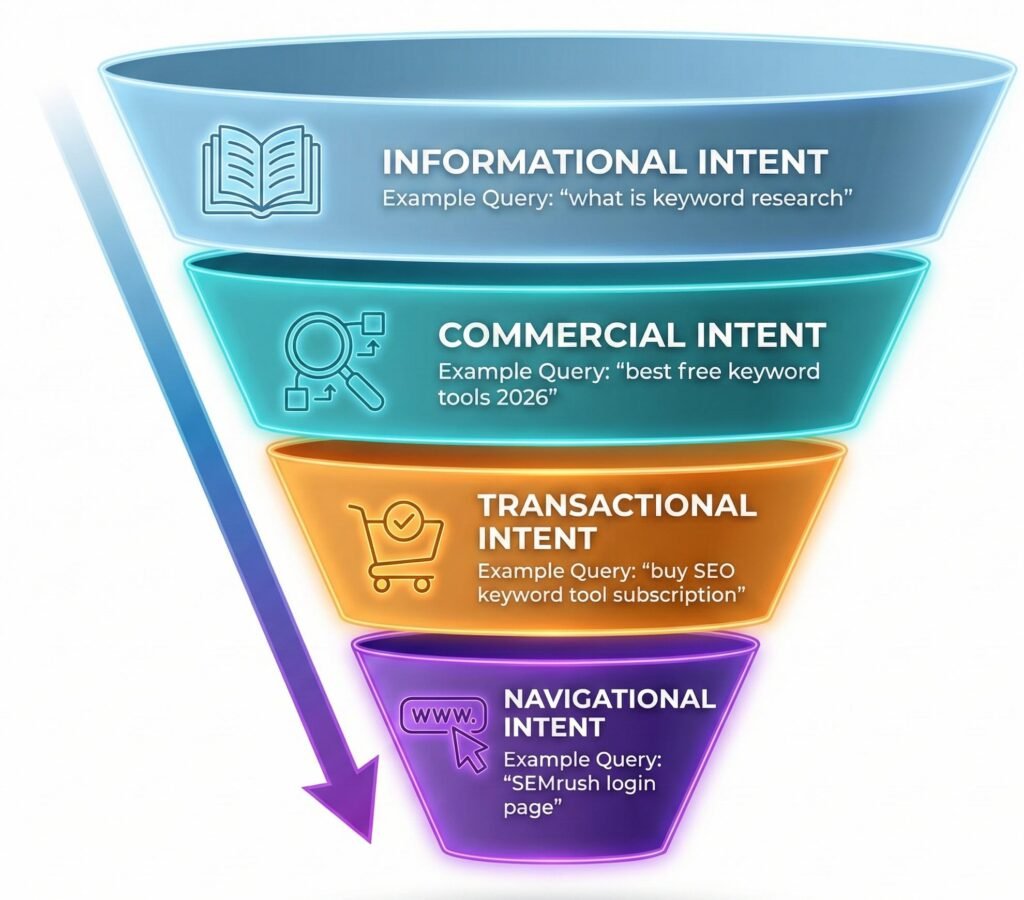
Stop Obsessing Over Volume; Master Search Intent
A common mistake in keyword researchis chasing a keyword with 10,000 searches that is too generic to convert. In Content Optimization, search intent is the only metric that truly matters.
“Keyword intent is one of the most important things to master when it comes to keyword researchand SEO in general. It refers to the underlying purpose or goal behind a user’s search query.”
Intent falls into four distinct buckets:
- Informational: Users want to learn (e.g., “how to sharpen a knife”).
- Commercial: Users are researching brands (e.g., “best wetstone reviews”).
- Transactional: Users are ready to buy (e.g., “buy King wetstone”).
- Navigational: Users want a specific site (e.g., “King Wetstone official site”).
Instead of writing for 100 different keywords, identify a Parent Topic. Targeting one high-volume “Parent Topic” with the correct intent naturally allows a page to rank for dozens of smaller long-tail variations, maximizing your efficiency.
The Reddit and Quora “Voice of the Customer” Hack
Spreadsheets give you numbers; Reddit gives you the “Voice of the Customer.” A professional strategist performs a Subreddit Analysis as part of their holistic keyword researchto find “passionate communities” and their specific pain points.
Use site-specific search commands like site:reddit.com “your niche”to find threads where people are complaining or asking for help.
- Gap Analysis: If a Reddit thread is ranking on page one for a keyword, it’s a clear signal that no “official” article is providing a high-quality, structured answer.
- Human Data: This allows you to use the exact language your customers use, which improves your UX signals and makes your content more relatable.
The “Easy Wins” Filter and Position Zero Strategy
For a new site, competing against “Goliaths” is a losing game. You must filter for “low-hanging fruit.”
- The KD < 30 Filter: Target keywords with a Keyword Difficulty (KD) of 0-29.
- The DA Check (Pro Tip): Don’t just trust a keyword research tool‘s KD score. Use a browser extension (like Ubersuggest or Keyword Surfer) to perform a SERP Analysis . If the top 10 results are “plastered” with sites that have a Domain Authority (DA) over 40, even a low-KD keyword might be an SEO trap.
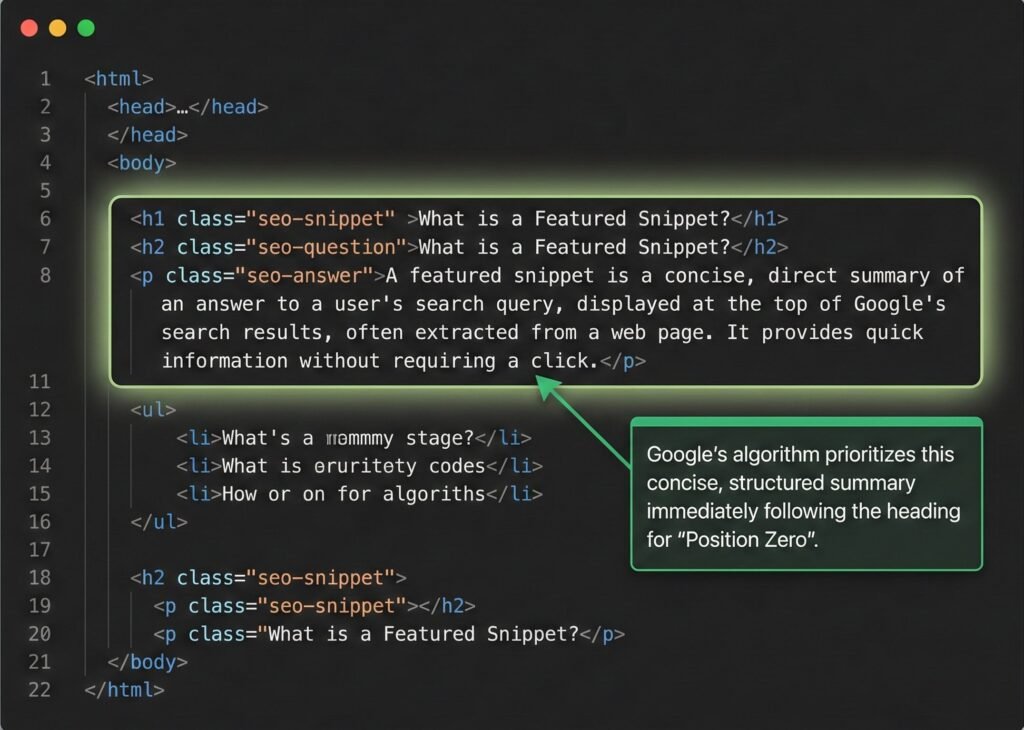
- Capturing Position Zero: To win featured snippets, use a specific formatting hack: Immediately following an H2 or H3 heading that contains your target keyword, provide a 40-60 word concise summary. Google’s algorithm prioritizes this structured information for the coveted “Position Zero” spot.
The Future of Your Search Strategy
SEO is a long game with immense staying power. Unlike paid ads, where traffic vanishes the moment you stop the cash flow, high-quality search content can generate leads and revenue for years. By focusing on accurate data from reliable keyword research tools, clustering keywords by Parent Topic, and prioritizing search intent over raw volume, you can build a sustainable organic engine.
Final Thought:If you could see the exact questions your customers are asking right now, would you keep writing the content you’re writing today?